7 Ranch Landscape Ideas for a Stylish Outdoor Space
Last Updated on 10/13/2026
Ranch homes are known for their wide layouts, low rooflines, and strong connection between indoor and outdoor spaces. These characteristics create plenty of opportunities for creative landscaping, but the design needs to work with the home’s proportions. Low planting, natural materials, defined pathways, and strategically placed trees can help create a balanced exterior. Whether you prefer a clean modern look or a softer cottage-inspired setting, the right landscape choices can give a ranch home more character while making the outdoor space more functional and inviting.
What Makes a Ranch Landscape Work?
A successful ranch landscape should complement the home’s horizontal form instead of competing with it. Before choosing plants or materials, consider how each element will relate to the architecture and the available space.
Consider these design approaches:
- Keep proportions balanced: Low shrubs and spreading plants can complement a ranch home’s long, low profile.
- Create visual movement: Pathways, planting beds, and changes in texture can prevent a wide yard from feeling flat.
- Use focal points: A carefully positioned tree, stone feature, or flower bed can draw attention to important areas.
- Connect materials: Repeating stone, gravel, wood, or planting textures can make separate outdoor areas feel connected.
The goal is to create an exterior that feels intentional while still reflecting the character of the home.
7 Ranch-Style Landscape Ideas to Transform Your Outdoors
1. Create a Modern Ranch Landscape
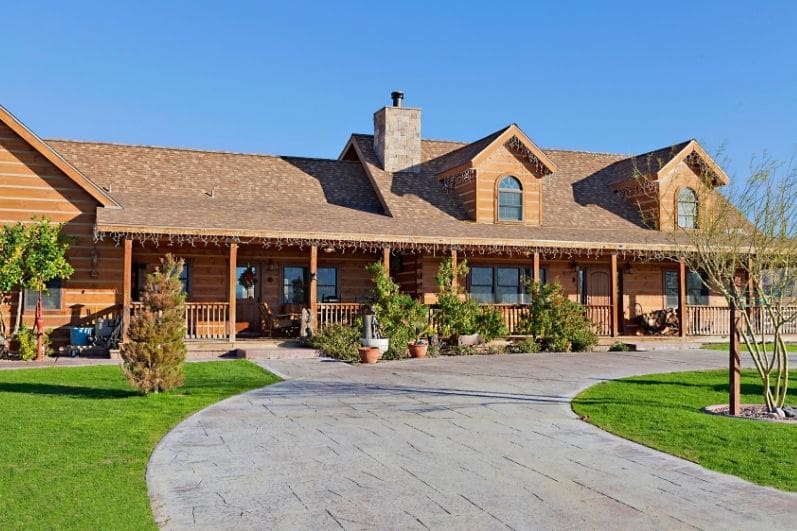
A modern ranch landscape can emphasize the clean architectural lines of the home. Geometric planting beds, simple pathways, and a limited selection of plants can create a contemporary appearance without making the yard feel overly formal.
Ornamental grasses, low-growing greenery, and architectural plants can provide texture while maintaining a relatively low profile. Large-format pavers or gravel can also introduce structure and contrast.
The key is restraint. Rather than filling every space with different plants and decorative elements, repeat a few materials and plant forms throughout the yard. This creates rhythm and gives the landscape a polished appearance.
2. Give a Conventional Ranch a Classic Look
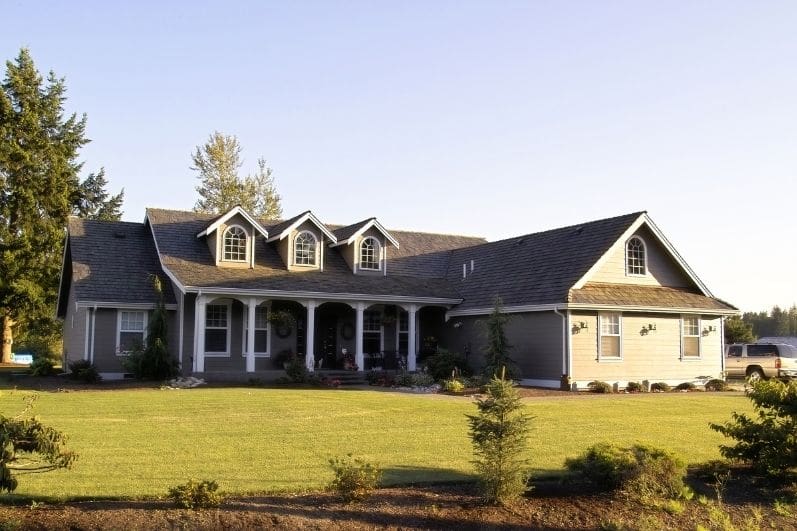
A conventional ranch landscape can take a more familiar approach with foundation planting, lawn areas, flowering shrubs, and clearly defined pathways. This style works particularly well when you want the yard to feel welcoming without dramatically changing the home’s original character.
Low evergreen shrubs can provide structure throughout the year, while flowering plants add seasonal color. A simple walkway leading toward the entrance can make the front door feel more prominent.
Defined planting beds can also help organize the wide frontage commonly found with ranch homes. Keep the plants proportionate to the house so they enhance rather than hide the architecture.
3. Add Native Oklahoma Flagstone
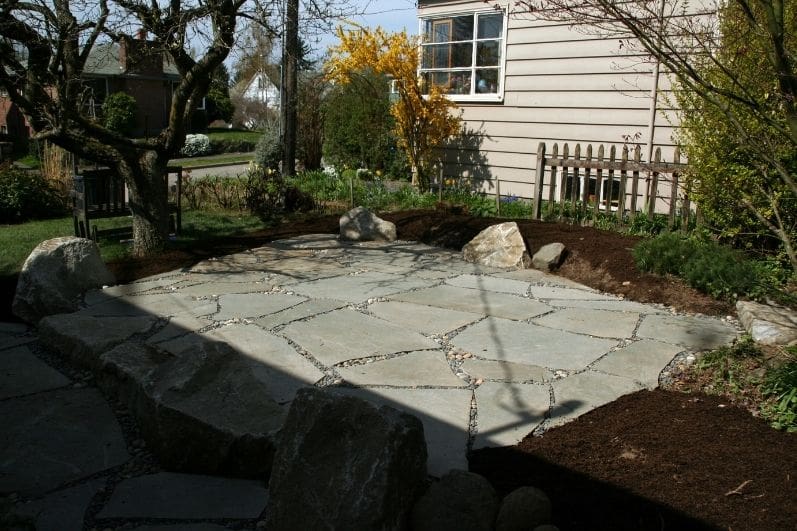
Natural stone can give a ranch landscape a grounded, regional appearance. Native Oklahoma flagstone is particularly useful for pathways, patios, stepping-stone arrangements, and small outdoor gathering areas.
Its irregular shapes can create a more organic appearance than perfectly uniform pavers. You can surround the stone with low plants, ornamental grasses, gravel, or groundcover to soften the edges.
Flagstone can also help connect different parts of the yard. A walkway might lead from the driveway to the front entrance, while another section can continue toward a patio or garden area. Using the same stone throughout helps create visual continuity.
4. Use a Tree to Balance a Flat Roofline

A wide ranch home can sometimes appear visually flat because of its long roofline. A strategically positioned tree can introduce height and create a focal point without changing the home’s architecture.
Instead of planting a large tree directly in front of the center of the house, consider placing one toward an entry, corner, or another area that needs visual emphasis. This can create contrast between the home’s horizontal lines and the tree’s vertical form.
Choose a species that suits the local climate and available space, and consider its mature size before planting. The tree should frame the property rather than eventually overwhelm the house.
5. Soften the Home with a Cottage Ranch Style
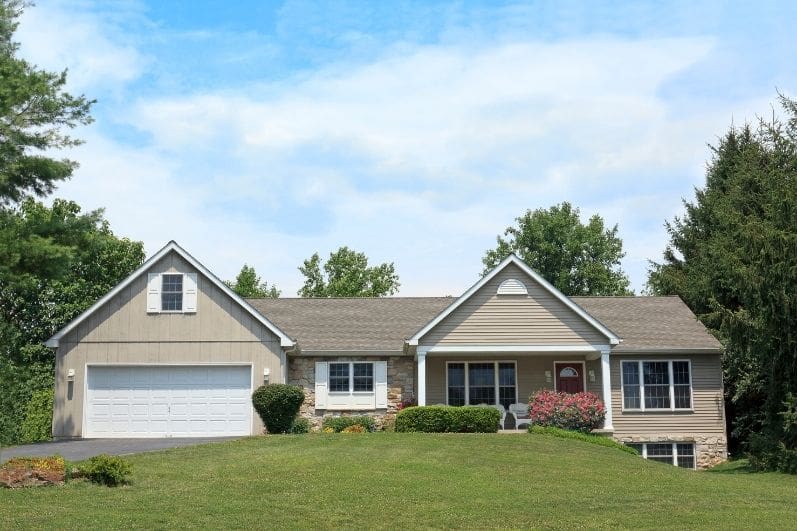
A cottage-inspired ranch landscape can bring a softer, more relaxed character to the property. Curved planting beds, flowering perennials, shrubs, and natural-looking pathways can make a wide ranch home feel more inviting.
Rather than arranging every plant in straight rows, group plants in informal clusters. Varying heights and textures can create a layered appearance while keeping the overall design connected to the house.
Flowering plants can provide seasonal interest, while shrubs and groundcovers give the landscape structure between blooms. This style is especially suitable for homeowners who prefer a garden that feels abundant without appearing overly formal.
6. Bring Desert Character to a Ranch Home
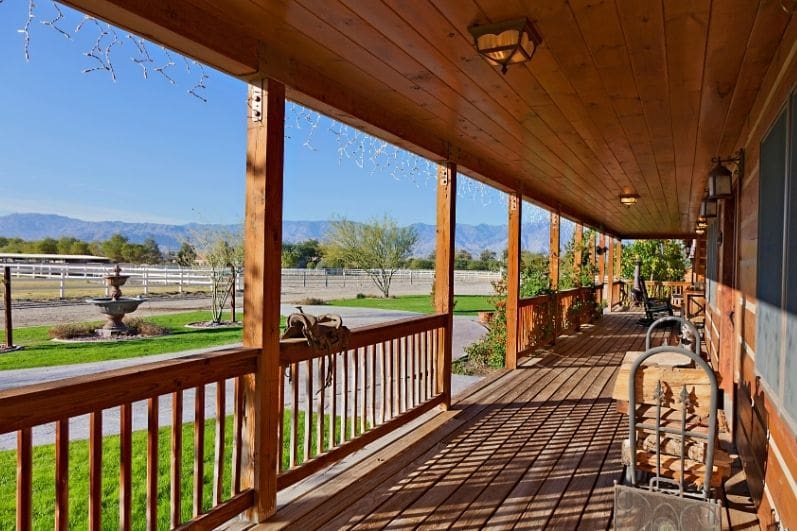
A desert ranch landscape can combine drought-tolerant plants with gravel, stone, and sculptural features. Agave, yucca, ornamental grasses, and other regionally appropriate plants can provide texture while reducing reliance on large areas of traditional lawn.
Use rocks or gravel to define planting areas and create contrast between different textures. Instead of scattering individual plants randomly, group them to create intentional focal points.
This approach works particularly well in dry regions, but plant selection should always reflect the local climate and growing conditions. A well-planned desert landscape can feel warm, structured, and visually rich rather than sparse. Drought-conscious design can also reduce landscape water demands when appropriate plant choices and irrigation practices are used.
7. Frame the Front Yard with Flower Beds
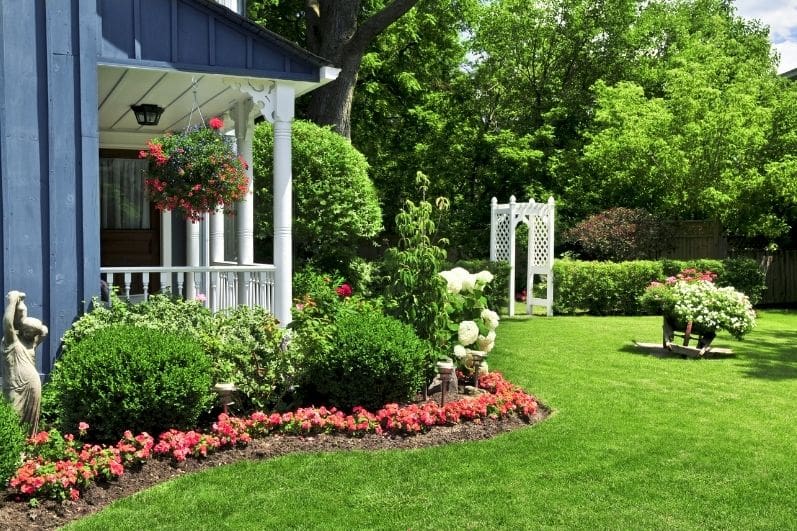
Front flower beds can add color and definition to a ranch home’s wide exterior. They can also help guide attention toward the entrance while breaking up large areas of lawn.
Consider creating beds along the front of the home, around a walkway, or near the driveway. Curved edges can soften a contemporary or traditional ranch, while straight lines may work better with a more structured design.
Use a combination of flowering plants, low shrubs, and groundcover to create visual layers. Keeping taller plants away from important windows can preserve views and maintain the open character that makes ranch homes distinctive.
Create a Landscape That Complements Your Ranch Home
The best ranch landscape does more than add plants around the property. It considers the home’s proportions, existing architecture, outdoor functions, and surrounding environment as one connected design. Ranch landscaping generally benefits from low, spreading planting near the foundation, while taller elements can be used selectively to create focal points and balance.
Professional landscape design in Texas can help homeowners develop an outdoor layout that suits their property, lifestyle, and preferred aesthetic.
Landscape One Design Build can help bring together planting, hardscape, outdoor living areas, and other elements to create a cohesive landscape that complements the ranch home’s character.
Key Takeaways
- Ranch homes have strong horizontal lines that can be complemented by thoughtful planting, hardscape, and outdoor features.
- Different landscape styles can give the same ranch architecture a modern, traditional, cottage, desert, or more natural character.
- Trees, flagstone, flower beds, and carefully selected plants can add visual interest without overwhelming the home’s low profile.
- A cohesive landscape plan helps connect the architecture, outdoor spaces, and surrounding environment.


Recent post
7 Ranch Landscape Ideas for a Stylish Outdoor Space

6 Creative Ways to Use Artificial Turf Outdoors